
What’s the secret to getting men to participate in medical research?
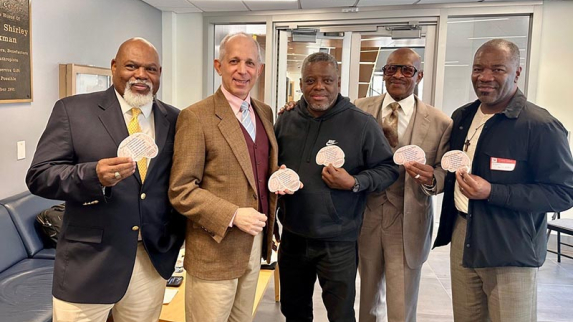
Rodney Barnard, 77, is one of the local community members helping Rutgers University–Newark recruit men to join a study of risk and resilience to Alzheimer’s disease in African Americans. He’s developed some insights on best practices:
Don’t overwhelm them. And be sure to offer a little enticement. “Our attention span is limited, so you’ve got to have a hook to hold our interest,” he said. Rodney focuses on a double-whammy: African Americans are more than twice as likely to develop Alzheimer’s, yet are underrepresented in research on aging and brain health. This study, known as Pathways to Healthy Aging in African Americans, examines the role of health, exercise, sleep, environment and genetics in the development of Alzheimer’s disease and other forms of dementia. Its goal is to uncover ways to delay or even dodge the disease.
Key to this work, however, is the participation of Newark-area African Americans who are 60 and over. They agree to give blood and saliva samples, take a battery of memory tests, and have an MRI of their brain. They answer surveys about topics including their diet, physical activity, and sleep. Some join exercise programs. Without them, there would be no research.
The program is overseen by Dr. Mark Gluck, a Professor of Neuroscience and Public Health at Rutgers University-Newark, and director of the Rutgers Aging and Brain Health Alliance. Over the last 10 years it has succeeded in enrolling hundreds of women by working with local churches and mosques, as well as the Newark Housing Authority. To read the full story.